No. 42 — Thirty Years in the Experiment ft. Kip Winsett
In this InSight, I’m joined by a true Human Design elder: Kip Winsett — a 4/6 Self-Projected Projector who’s been in his experiment since 1999.
We start with the real-time fuzzy texture of being online right now (and why Instagram feels different), then move into the deeper stuff: what it means to actually be yourself without turning Human Design — or any system — into a cage. Kip shares stories from his life that shaped his relationship to “right time, right action,” why the I Ching became a daily compass for him, and how Human Design gave him proof that people aren’t “supposed to be like you.”
We also get into Projector myths (including the way “wait for the invitation” can become disempowering when it’s taught without nuance), why Kip’s experience raising a Manifestor child didn’t match the popular anger narrative, and the thing he thinks Human Design culture is missing most: relationship — not just to others, but to your own design.
And near the end, Kip tells one of my favourite shamanic stories of all time (from Castaneda): the moment someone stops searching with their mind and finally lets their body find its place.
✨ In this conversation:
Why social media engagement has shifted — and what that changes for teaching Design
The I Ching as a practice of “right time, right action” and self-correction (without shame)
The 17–62 Channel of Acceptance as real understanding: “to stand under” and support what you can accept
Projector invitations and why the messaging often misses the point
Parenting differences: a calm Manifestor child, a more intense MG child, and what that taught Kip
Bullying, “purist” HD culture, and the tribal hierarchy dynamics that keep repeating
How AI can help a Wet Kitchens person organize their stew without losing the magic
Kierkegaard on the self, and why your chart is a blueprint for relationship — not control
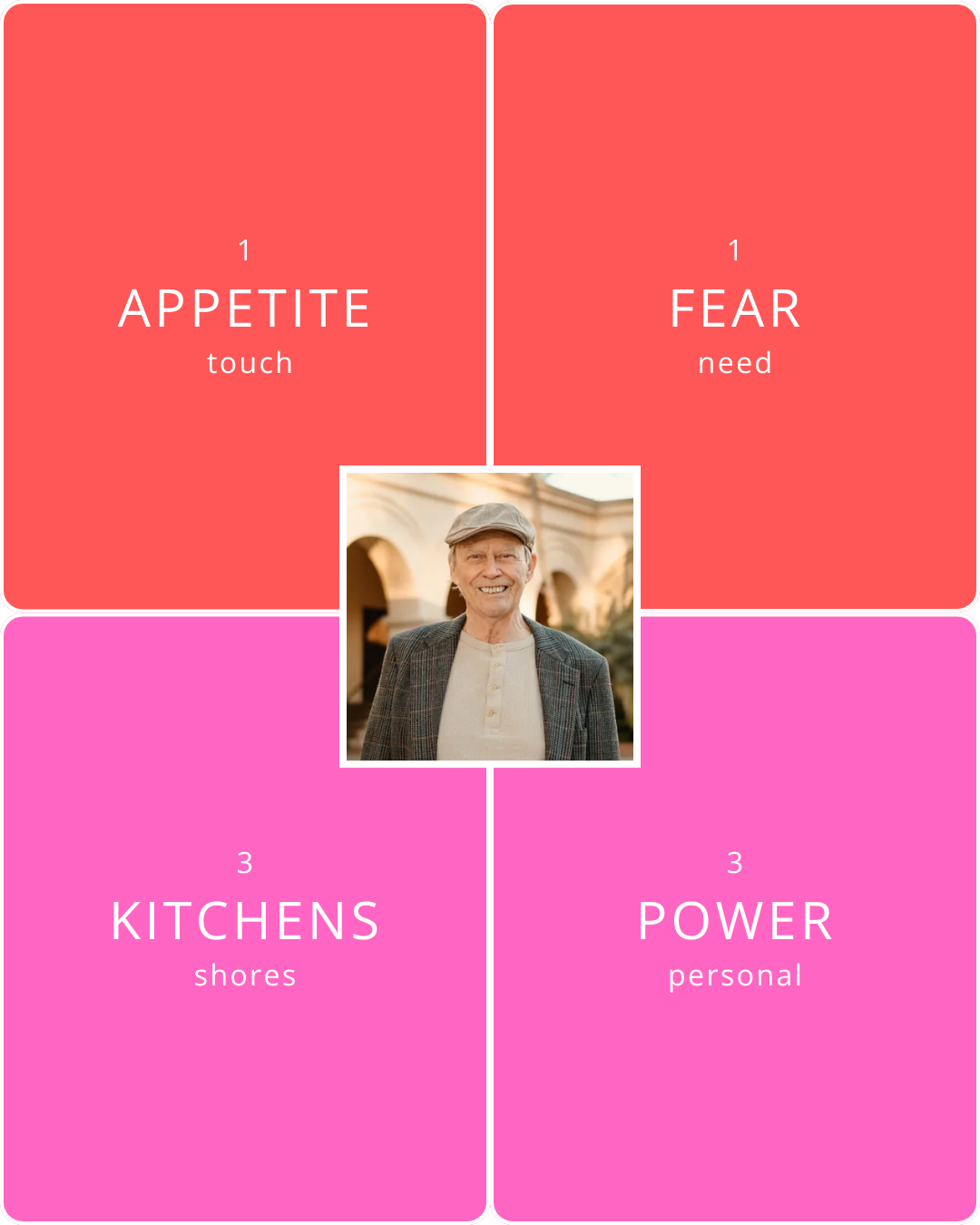
🧬 Kip’s Human Design Variables:
Determination: Appetite (Colour 1)
Environment: Kitchens (Colour 3)
Perspective: Power (Colour 3)
Motivation: Fear (Colour 1)
Kip Winsett
Website → https://humandesignsystempro.com/
Instagram →https://www.instagram.com/humandesignsystempro/
Reading → Get Kip's New Career Report
Vaness Henry (00:00.622) Well, Kip, thank you for coming on the show and chatting with me and letting us get to know you a little bit more. If anybody wants to learn more about you or learn with you or have one-to-one with you or any readings, where can we find you?
Do you have the address for my website and also where you can order the readings or should I send them to you?
Why don't you just tell us right now and then I'll make sure to link it in the show notes.
don't know that I know. Instagram, you just go to my profile, you know, and then everybody's got a, you know, stuff.
What's your Instagram handle? What's your name?
Kip Winsett (00:29.464) Yes. What is it? Human Design System Pro, I think. Yes. Thank you. I just click on something.
I'll be sure to include all your links below in this episode. So if anybody's interested, they're going to be able to click it and find you. It'll be very, very easy. I have a legend on the pod today, the one and only Kip Winsit, a 4'6 projector man, self-projected projector. First time on the pod. Hi, Kip. Welcome to the show.
I'm really happy to be here. You know, I don't really want to talk to you. No, I've never heard your voice. You have a lovely voice.
You've never talked with me. What? Hello?
Thank you, Kip. I'll receive those compliments from you. Yeah, we've been in relationship for a while. We've chatted online, but we haven't had a face-to-face chat like this, so pleasure to have you here. I invited you on the show today because we had been talking about the Human Design Hotel. I think you might have been invited to that. And you were like, not for me at this time. That would be a big trip or something like that. And so you were kind of, we were talking about you a lot recently. And...
Vaness Henry (01:39.97) You and I had started emailing and you had reached out and we were trying to connect. We couldn't connect, we're trying to connect. And then we turned this call on and you were like, how the heck does this computer work? Why isn't it my iPad? What is Riverside? How does this all work? And the reason we were getting into that was because we had talked about the fact that I had left Instagram. And you were like, Instagram has changed. I've been showing up there, I like to experiment there.
I love that you're a kitchens person because I think your Instagram grid is such a good example of you making art with your wife and explaining cool concepts for us to understand. But you had mentioned something's feeling different here. So what's going on for you with using social media and talking about human design?
It was
more relaxed, more people were engaged. People don't seem to be particularly engaged anymore. You know, when I first got on, people were sharing information and talking and there were some number of people that complained about, gosh, this isn't fair because, you know, we can't afford to buy all of Ra's material. And I totally get that. So I decided, well, I'm just gonna put out a lot of information, because what do I care?
I mean, for me, what I want is more people to understand how to transform themselves into who they are. That's my goal. And design is such a good way to do that. It's not the only way. I did it with VHA. It only took me three years to decondition. It doesn't take seven years.
Vaness Henry (03:21.068) And the I Ching is part of human design, right? It's one of the fusions in it that it's pulling reference from. Yeah, tell me about that. What's your, what do you think about that?
He didn't know anything about the I Ching when he started. He said the only copy he had was in German and he didn't speak German at that time. So he did a whole trip with the lines, but you know, I've done
Tell us, what's this juicy gossip you know that you're like, that's kinda bullshit?
Most of it's bullshit.
Okay, most
Kip Winsett (03:58.67) I I don't want to bust anybody's tops about this, really. I think what Ra did is absolutely amazing. It truly is. I mean, I was involved with all those things. I never thought to put together a synthesis. That was his stroke of genius, you might say. You know, he has the 4323. So you give me the genius of the freak. And too many people forget that. You get a lot of freaks. I'm married to a genius to freak, 4323 person.
And she knows something. I mean, she knows it. And I tell her she's wrong. She no, no, no, no, no, I know. And then I show her the proof and she goes, that's just part of the 4323 channel. They know whether anybody else does or not. I used to balk at me. Now I understand it. You know, I understand her behavior and we can laugh about it every now and then. She's a very serious person, a 6'2".
Darn.
Kip Winsett (04:57.026) So.
I find when I see my family members really being themselves and there were things that did start to bother me, you know, because like, why are you doing it that way? Because it was my own lack of understanding on why they were, let's say, approaching something the way they were approaching it. And perhaps it interfered with the way I would have approached it. And so my egotistical ass wants to come in and, no, do it this way, R.E.B. And then something started to shift where when I had started to recognize them being themselves, there was something about that that really charmed me.
You know, look at you being yourself. I love the way you're made. I love to watch you be yourself. I'm not sure when that shift happened, but it did happen. And it made observing people a lot more fun than instead of making me feel bad about myself or controlling or, you know. So what was some of the big shift? Well, first of all, could you take us through the story of how human design came into your life?
because you have told me, you I was studying the I Ching before human design. So that tells me this is obviously a person who was studying different esoteric studies or perhaps interested in cultivating self-awareness or interested in contemplating perhaps how the world works. And I know I've heard you talk about some of the different things, Don Juan, these stories that have really impacted you, but who is Kit before he came to human design? What do we need to know about him?
He was a hippie for the time. Then he went straight. They went really straight. got into computer programming. Then I had unfinished business in Hawaii. we, Lisa and I moved to Hawaii. What was it? I think.
Vaness Henry (06:39.158) Is kind of you going on the roof?
Yeah, I was on Oahu and I still did the computer thing, but I really didn't like it anymore because we left California to get away from all the hustle and bustle and, you know, waiting in line to get something to eat. I was really tired of it. So, and like I said, I personally had unfinished business there. So,
Kip, what does that mean? That's so alluring.
I the computer job there and we moved to the big island. That's where I had the unfinished business. I had lived there once before and things had gone horribly awry. So my first wife and I was our little girl and we broke up there. And that was really, well, yeah, it was hard for me. I don't deal with rejection well at all.
Who does? Yeah, it's a hard thing to deal with. Yeah. Okay.
Kip Winsett (07:36.449) I don't know.
We moved back to California. I moved back to California to La Jolla. And she rented a house. I moved in for a while and she said she couldn't do it. And I was just wiped out. I got a pleurisy from it. was so, it made me literally very sick. And here's the way my life works. Things happen and long comes, you won't know this song, Long Tom Jones.
Here comes the rescue. So I'm reading some book, it's a piece of fiction, and the guy writing it, the character has the same thing. He can't handle rejection and it makes him sick. And I went, oh, wow. So this is not peculiar to me. This can happen. This is okay then. I'll just move on with it now that I understand that.
I don't know, most people don't understand the 1762. It's understanding.
How do you understand it? Could you distill it for us?
Kip Winsett (08:45.614) It's the basis for the understanding circuit. essentially the way that works is that I can understand something, I can accept it. Both those are words that are associated with 1762 acceptance and understanding. As long as I can understand. And I don't mean mentally, because understanding comes, if you think about that word, it means to stand under. It means to support.
If anything I can support as myself, I'm okay with. I can accept it. If I can't support it, really understand it, then I don't want anything to do with it. It's what makes life really easy. There's a lot I can't support. The world is full of bad behavior.
Where were you wanting to go support when you went back to Hawaii? What was calling you back there?
Well, two things. My wife has
Because you clearly wanted to understand something, right?
Kip Winsett (09:47.31) Now, part of it was Lisa. She wanted to have an adventure. She wanted to live somewhere else. She was born and raised in La Loya. Other than a trip across the country, she never knew any other life. And she wanted, because I would talk to her about my adventures. I've had tons of them. And so we talked and talked and talked. And we both agreed, well, it has to be warm because we don't like the cold. We thought about Australia. That was just too much trouble.
She had lived in Hawaii for a short time, I forgot about that, when she was 16. So she liked Hawaii. So we decided we would move to Hawaii. We would move to Honolulu, because that meant I could continue my career as a programmer. And like I said, we hated it. So I moved back to the big island. I was being very called back to the big island.
she'd been exposed.
Vaness Henry (10:40.696) Did you guys have children together at this point when you moved there? Yeah, no.
Lisa Naina, we had our first child in Hawaii, Micah. And couldn't have had an easier child. Unbelievably easy.
Okay. Okay.
Vaness Henry (10:56.558) What's design of the child?
He's a 12-22 emotional manifesto, but he has the second line in Gate 22, I think it is. And basically that line says, yeah, I don't mind playing second fiddle. I don't have to be out in front. I'm okay. I'm me. And he also has the 20-57. Yeah. So he's always a step ahead. He can hear.
Manifestor.
Kip Winsett (11:29.09) things before the rest of us can hear them. And he can make adjustments to his behavior. So he's just really, really... When I heard this stuff about manifestors being angry all the time, I said, that's just bullshit. That's based on Ra's experience.
into something else.
Vaness Henry (11:48.526) did want to tell you, I have, like, so I kind of have a moment with you, because I've had readings with you and I've had indirect experiences. And I was very impacted by the kindness and the graciousness you use as a dad talking about their manifesto child and how you had said, you know, my experience as a projector dad raising a manifesto son, I don't see that anger so loud and defined.
So just the fact that you would create the possibility that you're not doomed to only being that way. I find so much of the language that we speak to manifestors is get a hold of your anger, manage yourself. And it really is telling about the original translator of it because we're not really speaking to their signature, we're speaking to their not-self. And so what was it like raising, what was it like, I would love to know what it's like raising a manifestor child.
I'm telling you, I'm not kidding. This little boy, you know, a lot of kids wake up early and they start screaming. They want their mommy. want the butt, whatever. Now, you know, he was, he was willing to sleep in or he would stare at the, you know, we had a, do call those things that hang from the ceiling and he would look at that and he would make, yeah, he would make cooing sounds and he was just very at ease with whatever was going on. And, um, I think.
mobile
Kip Winsett (13:16.898) He got in trouble.
As a small kid, I mean really small, like two, three years old, I only remember one instance where he kept doing something I told him not to do. So I just used a little, let's rearrange that circuit in him. You know, was behavioral approach. And so I took him over, we had this big, what was a big cabinet, 29 drawers in it, small drawers.
Grammar, yeah.
Kip Winsett (13:48.48) all kinds of stuff, pencils and pens and scissors. That's where we kept all that stuff and was organizing. Of course, to him, that was a treasure chest, but it was a danger chest as well. So I told him not to touch it and I told him three times. I mean, that's fair, right? Three times. Okay. So then I just smacked his hands with my two fingers really hard the next time he reached for it. And he never reached for it again, which I knew would happen.
Kip Winsett (14:16.96) I mean, that's soft conditioning works. I had already studied BF Skinner and I know how that stuff works. So I just, I used it and it worked great. He didn't get in trouble again for a long time, but I got home from work one day and my Lisa was really pissed. Now she doesn't generally get mad. She was really mad.
So your wife's upset so you gotta go yeah
Wait, you get home because you're really in trouble. Well, what did he do? think he did something really bad. Drew on the walls. Uh-oh. We all know better than that, don't we? All of us. But you know what? We never told him that. How would he know? I walk in and I said to him, so why did you draw on the walls? And he goes, because they're our walls.
big canvas, right?
Kip Winsett (15:10.862) What a point indeed, what a point indeed. And so I explained to him, get on our walls. And he got it.
What a point. Yeah, what a point.
Vaness Henry (15:23.362) No, didn't know that, Dad. I just thought these were our walls and they're ours. And if I want to, you could see the innocence in it. And you can also see the poor mom who's like, you drew my fucking wall. Like, my God. You know, like that both those things can be true and he's got to learn that. Yeah. And so then you're kind of in there keeping the peace, I guess.
Well, I'm just doing what's right. I mean, this was my whole transformation process was to understand the way it goes is doing the right thing at the right time in the right way toward the right end, always. That's what my objective was from age 28 on.
Yeah.
I used the I Ching for that because it made me do things that I would never have thought to do. looked, it made me look at things. Every morning I'd get up and say, which principles of right action should I follow? And every night when I got home, I would ask for judgment. And early on in the process, the judgment was sometimes in my, the way I interpret it was bad. So I would bite myself, bite my arm really hard. I would hit myself in the head. Really. That's how I was raised. If you're bad, you get the crap knocked out of you.
Yep.
Kip Winsett (16:39.81) It's
So you're going to engage in self-harm.
Yeah, it took me a year to get past that. That's fast deconditioning because this goes back to when I was seven years old. So I got through that pretty easily with the help of the Yi Qing.
Yep, just a moment for that. That's really devastating to hear. Like to imagine you this, you know, wise individual and there was obviously your normal childhood was we're gonna beat you up till you get it right, you know? And then that you would internalize that that's normal. So I'm gonna also self harm when I make a mistake. That's rough, you know? If I imagine my son, imagine a little boy, you know, hurting himself because he did something wrong, like that feels devastating as a parent.
Yeah, you I mean, you get punished enough and you you and I got it. Believe me a lot. I got it when I was really young with a horse whip till my grandfather stepped in when he found out about it. And then it was belts and you know, but not a horse whip. mean, how demeaning is that? So.
Vaness Henry (17:40.418) Yeah, Kip, this is horrible information. I'm sorry to hear. Okay. I mean, we're laughing. I'm laughing at it because it's almost so extreme that it doesn't seem imaginable. And you're like, no, that was my, that's where my story started.
Yeah, that was basically, but that was only, see, I spent my summers from age seven on with my grandparents. They had me the first three years of my life. I was born in 1944, the war was still going, my dad's still in the Navy. My mom didn't want anything to do with raising the kids. She was staying with my grandparents there in Arizona. So she just split, left me with them and they adored me. They adored me. I mean, I don't remember it, but I know.
Every summer that I spent with them, I was adored. My grandmother especially, God. My grandfather never, he once said a harsh word to me in seven years that I went back there in the summertime. I had total freedom to be who I was. And for an SPP, you can't ask for anything better. I know what to do. I don't care what anybody says. I don't have to talk to anyone. To me, that's just bullshit. I know. I mean, how could I not?
That authority sits right in the self-center, right where the monopole is, which is drawing me. So I just go. That's what it means to be an SPP. You're be yourself. Manifest yourself. yeah, you you're not a man official.
Yeah, but the verb itself, right? Don't worry about the title of it and what that means, but everybody has the ability to manifest their experience and bring, yeah, bring something. Okay, a question. Yeah. Do you have grandchildren now?
Kip Winsett (19:23.31) I do. have two granddaughters who were in their twenties. And both of them were almost... I couldn't be around them. They were just horrible little brats. I'm not kidding.
Okay, okay.
Vaness Henry (19:35.658) wondering about the grandparent experience because you were saying you my grandparents adored me now you're a grandparent and you can see that role and you're saying they're brats
I sure wanted to. Well, part of it is they lived quite a ways away. His wife, her parents lived down here and she wanted to get far away from them. She had problems with her parents too. So they moved up to Monterey. And you know, that is a long trip for anybody, know, and taking time off from work and so on. So we didn't see the girls too often, but when we did, the one of them particularly was really quite nasty to me.
And you know, if an adult did that, they would not be happy with the results. you know, that's my granddaughter. I can't really have a history fit. But she had plenty of history fits of me. so I just didn't.
and connect.
Yeah, I have a grandson now, my younger son, he's 31 now, 32. He lives in Tijuana, Mexico with his wife, she's Mexican, and I have a grandson. He'll be two years old in February. But he's little. He's really cute. And we had him up here for the whole day recently.
Kip Winsett (20:56.61) We had to take him to a doctor in the US to get certain information so he could get a social security number. The doctor had to verify that the kid existed. So he cried and the doctor, well, they were giving him shots. Of course he cried. And they were doing other weird things, examining him. When he got home, man, we never heard. He was just so cool. He's very different. I don't know. mean, he...
Okay.
Vaness Henry (21:16.206) Terrifying.
Kip Winsett (21:24.886) He loves to jump up and down.
Do you know anything about his design?
I'd have to look it up. He's an energy type. He might be a manifesting gen. I don't know. His father is. So I raised a manifester and I raised a manifesting generator.
We've got energy.
Vaness Henry (21:44.664) How are they different?
Austin was not calm, cool, and collected. But Michael was. Michael was easy one.
Michael was the easy manifestor, let it be known, and the perhaps more energized Austin was the MG.
Yeah, and he's straight up, pure manny-gen, know, the center column straight up. And, you know, he's also a 3'5".
That pipe energy, yeah, cool.
Vaness Henry (22:12.216) Love the 3-5. Kip, what's your favorite profile? Because it's you?
No, because they're so much fun. They're so cool.
They're your favorite to watch? You like to watch other four six?
Yeah. When I go out into the world, I make an attempt to interact with a lot of people. But only certain people will really interact back with me. I mean, yesterday I'm looking at some tea and this lady comes up, she happened to be black and she's looking at something there and I said, oh, what kind of tea are you going to buy? says, oh no, I'm going to buy the hot chocolate. I said, oh God, I haven't had hot chocolate in 50 years. And we wound up talking for a few minutes.
And when we were done, she gave me a big, hug. She has to be a 4'6".
Vaness Henry (22:58.56) I've seen you guys in action and it's wild who you can talk. The hermit in me is like, I had a four-six come out and visit and the way he knew all my neighbors before I did, it was wild. Like I was like, what is happening? He just, your neighbor's so and so. I'm like, I don't know who that is. Like I just moved in. yeah, I was talking to them. It's pretty impressive. It's pretty impressive. I want to say your story back though to you, make sure I've got it. So by the sounds of it, you're a four-six self-projected man and you fell in love with a six-two...
Generator? Pure generator? So there's these two six lines, so right away I'm like, cool love story going on, okay,
You're generally
Kip Winsett (23:34.538) Both of us have a defined mind, defined throat, defined self, and then she has the sacral. She has one more center. Between us, we have a defined head.
And she is.
Vaness Henry (23:45.806) Okay, so you come together, guys cut the defined head.
We have very little effect on each other in that sense. We don't condition each other.
You guys collaborate a lot though, like when I would see you guys do stuff online and that's very cool. So you and your six line wife, you guys, this little soulmate journey that you're on, sounds like going on the roof process. We maybe go to Hawaii, we want to get away. It's maybe too loud where we are. Then we have children in Hawaii. Our children grow up, they have kids. You tell me that human design came into your life around 50, kind of coming off the roof, you could say.
don't know how human design has changed the way you live coming off the roof. If you could even look at it that way, because I know it's like, well, this is how I am.
mean, it's hard to be that specific, but I was not all that, well, if I didn't understand it, I couldn't accept it. And I didn't understand a lot about other people, which made it hard. They, to me, for a long time, I figured that the way I was is the way everybody's supposed to be, because I'm okay. So if you guys are doing something else, there's something wrong with you because you're not doing what you should, which is basically...
Kip Winsett (25:02.318) to be like me. Human design showed me proof that that's simply not so. That I'd made a big, big, giant mistake, although in completely good faith. Because I mean, I'm going through life basically doing the right thing in the right way and the right time towards the right end. trusting that I'm, because I got to 1020. I mean,
What does that mean to you for anybody who doesn't know what the 10-20 is? What does that mean to you to have that channel?
There are things about it that are really magnificent. One is it's dedicated to high principles. And I've always been like that. know, the highest principles are what I strive for. The thing that has been so cool about it in my life is, Kate Tann knows what the appropriate behavior is in any circumstance. And on that account, I got away with really a lot.
as a young person in the world. Really a lot because, well, when they would say, why did you do that? I always had an answer. And it was always a good answer. Because I don't know, I just knew what to say. So it saved my bacon in big time ways more than once. I mean, to me, 2010 is, well, I love all my channels. I don't know what to say. They're all just, they're just so cool.
And I don't have to do anything to be them. Nothing, not a single thing.
Vaness Henry (26:37.546) I think this is the biggest takeaway. Like, when people start to study their design, you can tell when they reach a certain threshold because they start to fall in love with their own definition, their own experience, rather than this sort of rejection of like, I'm this type and I wish I was that. You you hear the trope a lot of, let's say, the projector who wishes they were the MG or the MG that wishes they were the manifest or whatever the story is. There's this like self-hatred a little bit and wanting to be something else or self-rejection.
So as somebody starts to learn more about themselves, there is this process of falling in love with their experience and who they are. That's my favorite part of it. Yeah.
Me too. Me too.
As a six line Kip, and you've been in the study for 30 years, you've been experimenting for 30 years, I don't want that to be missed.
Since 1999
Vaness Henry (27:32.494) The year my dad died, what a year, 99, with turn of the millennium, gonna be 2000? Yeah, terrifying time. So I'd imagine as a six sign you've watched some cycles repeat themselves. What are some things you see happen in the human design space?
What do mean?
Well, I guess as a six line, part of the experience and gaining your wisdom is there's these patterns of things that you go through or these things that you see. there's that again. there's something I know you've gotten your backup about before is that you will see bullying in the space and you're like, okay, well, what comes up for you around bullying?
I just don't like bullies. I'm a small person. And my dad taught me very young to stick up for myself. So I got in fights. I'd go to school and I'd stick up for myself. And so then I'd get in trouble at school and then I'd get bad grades for conduct on my report cards and I'd come home and my mom would whip me. It was really a mixed reaction. my God, no kidding.
But I do stand, I've always stood up for myself and the interesting thing is that my aura, I guess, is big enough and strong enough that when I do, nobody ever pushes it, ever. I've backed down some really big guys, not backed them down through force, you know, not threatening them, but just in saying the right thing. So.
Kip Winsett (29:01.814) I don't like when people bully those they consider weak. Mostly what I saw was men bullying women. You would think I would not like women all that much, given my mom's behavior, but my grandmother counteracted that, I guess. I don't know. My whole life, I've preferred the company of women. As a teenager, I would call up girls and we would talk for hours. You can't do that with guys.
Okay.
Vaness Henry (29:28.022) And you're self-projected, right? So that's, yeah, that makes total sense.
Guys don't want to talk for hours. They don't want to talk about themselves. But I do. Women were good at talking and good at listening. I had a whole group. And then I moved and who said disappear? But you know, I still have pursued that path. Women to me,
Well, I they can really be bitches. There's no two ways about it. But not always, but quite often. If you interact with that in a softer way than you usually do, you're going to find that, OK, eventually they come around to their own change. You have to. What was it one of my mentors said? You can't change anybody. All you can do is offer them the opportunity to change.
So it's up to you to figure out what that opportunity is. And I saw that the guys were really trying to take away women's voice. No, you don't know what you're talking about and blah, blah, blah. I mean, I actually had, I contacted a couple of women on there because of the ways that they were being treated. And I don't listen to that crap. It's just not so, it's just not right.
And why would the character be trying to take away the voice of this person? Like, why is the guy trying to take her voice away, in your opinion? Or belittle her? Is she saying something that he finds... Like, what is the reason for that?
Kip Winsett (30:59.84) I it's conditioning. think it's how they're raised. I don't think any of us are born into original sin. I just don't buy that. I think most of us come in. Now there are exceptions. There are people that have aggressive designs, you might say, but quite often they outgrow that. I mean, you are who you are. And if you're a shithead, you're a shithead. And it's not up to me to fix that. And if you go through your whole life as a shithead, then I have to assume
Unless you just liked. I mean, no, it's not for me to decide that that's wrong to be, is what I'm trying to say. Totally. It's none of my business.
It's your perspective that that person's being a shithead. Somebody else may not perceive them that way.
That's all. I just don't hang out with them. To me, they're toxic. I've got so many open centers that I don't... And I mean completely, no definition, no hanging gates.
Yeah, your head, your ego, your sacral, your spleen are totally open. There's no activated gates. That's incredible. Beautiful design. And then you got a lot of activations in your throat. Yeah.
Kip Winsett (32:03.246) I've got a lot of different voices, huh?
So I heard you also mention something about you know, you had mentors and I know that you have talked a lot about working with Chaitan
Well, he, I had my first reading from him shortly after he started doing a class at home. And, I went to it cause it wasn't too far away. think he was charging. I'm going to just say, I think $150 for an eight hour class. I mean, he could have that price that low because there were multiple people coming. And, I had finished my advanced training with, Xeno.
paint.
Kip Winsett (32:43.726) in New Mexico. And I was kind of, I don't know, at a loss. I had all this information, but it hadn't organized yet inside of me. know, it's a one week thing, eight hours a day for a week. You can imagine the amount of information that was given. I couldn't do a reading. I couldn't put it all together. So it was nice to sit and
When do you integrate it?
Kip Winsett (33:11.97) face to face with him in the same room. He's a very gentle man and he has the cross of explanation, so he's pretty good at explaining. he got into human design, I want to say, maybe a couple years before I did. I think he was, there was a whole bunch of people that were going over to India to study with, I forget the name of that guru.
Big time one, he came to the United States and I had a thing up in Washington and I just don't.
You had two the 2000s? Mm-hmm. Is this in the 2000s? Early 2000s?
this was in the, well, that whole trip happened in the 80s when I was in Hawaii. He was big, and I just can't think of his name right now, because I don't pay much attention to him, but a lot of people really got into his trip. Zeno was into it, Chetan was into it. And it was all this kind of, here's a little gossip. Give it to us. Ra was living in Ibiza.
I coincidentally happened to have been living in Palma de Mallorca, the bigger island in the chain, some years before that. I'm about four years older than Ra would have been if he were alive. So he's living there and he's living a hippie life. You know, I understand the hippie life and he's taken LSD and I totally understand that. I took lots of LSD and I took really big doses.
Vaness Henry (34:45.814) It was, hey, you said you were a hippie. We got it, yeah. Yeah, right.
I know where Ra got his stuff from. There's no voice up there on Jupiter. Come on. I mean, seriously, you got to be somewhat realistic about this kind of stuff. Now, does Jupiter have an effect on you? Sure, probably so. But not because there's an entity up on Jupiter. It's just not like that.
That's my friend.
He was just, you're just saying he was just tripping balls and that's how it came through for him.
Well, a lot of it, you know, some of it came from at that time there were only there were a certain number of books being written. I like the Castaneda books by Don, by Carlos Castaneda about Don Juan. He got so much of his trip from those books. So happened that I read them. I read them before he did. Very impressive. If you do an LSD, and at time I read them, I was also going to the Native American church, very religious with Peyote. You know, it's a
Kip Winsett (35:47.294) evening to dusk, you're there stoned. It's a trip. It's a real trip, but it's very, very spiritual. Guys, these Indian guys would get up there and they would start praying out loud and they would pray for everything in their lives. The president, the military, they didn't like them, but they prayed for them, but they would do well. Just well-wishing. And that really impressed me. You know, instead of this vengeful trip,
of some religions, they just wanted to care for everything around them. And that made a real impression on me. And you know what? I didn't realize it until this very moment. I didn't know that.
You know, the story of Castaneda and Don Juan, in my shamanic studies we hear about that story and the relationship between these two people. But for anybody who doesn't know, what is that story and what is it about that has such an impact on you?
with the Paity Church.
Well, the story of Castaneda and Don Juan, yeah. Or if that's the part that impacted you, sure.
Kip Winsett (36:55.246) No, they were connected. I read the books when I was living up in Arizona, up on Williams, the great gateway to the Grand Canyon. I would go onto the Navajo reservation where the Grand Canyon is, and I would take LSD and talk to rattlesnakes and do all kinds of interesting things. They would follow me and give me their song. I I had so many adventures, and it's not that one of them is more important.
It's the sum total that was really important. You know, this all happened during this Uranus-Pluto, what do you call it? They're lined up in conjunction. 12 years. Okay. Cool. it was a huge thing. I'm not interested in astrology, but I was reading another book, a very academic study.
Kip Winsett (37:53.302) And this guy was talking about it and I had lived through it and everything he said was absolutely correct, 100 % correct. That conjunction impacted life on this planet, whole planet, doing all kinds of, there were revolutions everywhere. Kennedy was killed in that period and Castro came into power and the whole thing with the black community saying, no, we want to be able to vote in the early sixties and the...
riots and the marches and you know just turmoil. 12 years, well eight or ten years. It started when I was 16. So that affected me deeply because I was young and my design was open to everything, absolutely everything. And I did whatever came along and I did a lot of things that were so cool.
Really, really, and all of which had some impact on me at levels that I'm still discovering, like this one about, you see the way I treat people? I think that's because of watching those elder men pray like that, caring about everything. I don't give the bullies a hard time. I'm not here for that.
But it's interesting that you go to the bullied.
I don't talk to them. I don't tell them to change. I try and heal the people they've hurt.
Vaness Henry (39:21.538) Right. That's what I'm saying. You don't, if somebody's bullying, it's what I'm hearing is you don't go to them and say, hey, you're bullying, but you do go to the recipient of the bullying and you go, hey, my perception is you're being bullied here. And that's not, that's their trip. This is not actually about you. It's funny. You reach out to me quite often about things like this, where you see someone being bullied and you don't like it. Why do you come tell me that? I think it's very interesting that this is something that we need on.
Because I too have seen things in this space where there's a huge policing that could happen. People want you to understand information a certain way or they want you to educate around it a certain way and they want to control the delivery of certain experiences. And when somebody is doing something different or they're differentiating or they're doing it their way, it's almost like triggering and activating. And so there is this culture you could say.
of people wanting to keep things very pure and from the source and credited properly. And like from a journalistic point of view, yeah, I agree with that. And also a lot of our teachings say, you we do need to apply and modernize these things so they apply to real life now. And if we're not doing that, the teachings will just kind of dissolve and that's really the true tragedy. So how can these both things be true that we have people who are kind of purists and really want to
There is a need to have these original source teachings this way. And also, it's a mutative study that is growing, and it's kind of been self-declared as that way that this will change and evolve. So why is the culture around this study trying to police and keep people learning it a certain way? Now, that's not like the source doing that. That's the community having their feelings. What do you see? What patterns do you see in these human design communities as the study grows?
Well, that's a very tribal behavior. The tribe is hierarchical, and there's really nothing to be done about that.
Vaness Henry (41:19.266) Very tribal.
Vaness Henry (41:26.442) That's going to continue to happen. That's like part of the mutation.
That's part of the human DNA. And the reason is that it works so well. It still works well. You know, you look at the, check out police forces, military, all those things, they're highly organized and highly stratified because it takes that kind of to get people to come together for a common purpose. People don't want to do that. People mostly are not interested in a common purpose.
The only reason we have firefighters and policemen to help us out is because we pay them. Nobody would volunteer to do that, put their lives at risk all the time. But we need to...
My dad was a volunteer firefighter. He didn't get paid for it. We were in a small town, so hey, some of these things are possible if the land is gonna burn and somebody's gotta do it. But I hear you, I hear you.
You to deal with a fire. I know I lived in a little tiny town and the only fire that ever happened there was when I started.
Vaness Henry (42:29.272) Well, I want to say this is coming from a child's mind, so I don't know how accurate the memories are, but I do have many memories where the alarm would go off in the middle of the night at like 3 a.m. and then all the men would gather and they'd go and because some of the wives and children would follow them to watch them put out the fire. So I do have memories of like, because we lived in a rural place and so sometimes it was easier for the men of the town who were trained and had the equipment.
to go put out this fire rather than wait for the city officials to travel in. The fire could overtake it at that time. So it was the community coming together to protect each other. And I think that that is part of the essence of what happens with human design culture too. Like they're trying to protect something or, but a lot of it is the way I understand this thing, I don't want it to be rattled and sweep the rug out from under me so I don't understand reality anymore. So there is like a needing to understand things certain ways.
So I think when I'm looking at the human design community and how much it's grown, what you're telling me is we're always going to have these little tribal disagreements as we're figuring things out and mutating them. And then it sounds to me like we find our people through that. You really do find who you resonate with. When you were kind of going through your studies, now you're in your 50s, it's 99, you're going into the 2000s, you're learning alongside Chaitan.
Are you making a little cohort? Do you have a little network of people that you're learning with? Is your wife learning with you?
My wife hated human design for a long time because she couldn't stand her off. She just hated the sound of his voice. She hated everything he said. A lot of people had that. He talked about generators as being slaves. she's a generator. just, she would... No, we had some arguments.
Vaness Henry (44:10.412) right.
Vaness Henry (44:17.326) And like, we understand what he's trying to explain. And also, also that would be hard to hear. Like, again, both those things can be true, right? Imagine someone's like, you're a slave, you're a generator. It's like, whoa. I said the same thing to you, you know? Part of what I heard as a manifestor is you're doomed to be angry. And it's like, that doesn't feel true for me. That doesn't feel fair. And also, if you're telling a manifestor anything, they're going to kind of reject it. So it's just coming from one person's perspective, who's a 5'1' manifestor.
Who, by the way, has never had ever and never would have had the experience, the actual experience of being a projector or being a pure generator. know, much of any, all he could experience is a manifesto trip. He couldn't experience well managen. But that's it.
genius to
Vaness Henry (45:11.31) Great, I suppose.
He doesn't really know from experience what it's like to be, you know, any of those.
I want to just kind of affirm this and underline it. I want to share experience I had just recently with my friend Jasmine Nenna. We went to the Human Design Hotel and she really is a studier of Marianne Winnegar's books, or Marianne Winnegar who did Human Design America. And she has the revolution of one book, which was just her experience as a 6'2 generator and really surrendering to the sacred authority. And what is that really like? Because so many generators think they're doing that.
emphasis on think, and it's not actually happening in their body. And so we were in person and I was watching her people, watching her put other generators into the sacral experiment where she was really getting them connected with their gut feeling. And I was kind of there watching and observing this, like realizing I could never teach it, realizing I could never embody this, like only a generator could pass this on to other generators and how valuable, may I just kind of amplify that?
I'm not of any value to the generator when I'm trying to explain them this, but she is. And isn't this valuable? And I love generators. I'm married to a generator. You're married to a generator. We've witnessed their power. I want them to be healthy and well. So there is something about projectors, sharing with fellow projectors what the projector experience is.
Vaness Henry (46:40.618) you'd be surprised how many people try to tell me what my manifestor's experience is and they're not manifestors. And I'm like, you don't really have an understanding of this. So when you're able to go to a fellow projector, or for me, a fellow manifestor, and have this sort of kinship, there is a different kind of understanding that for me, a lot of peace comes out. When I'm with another manifestor and they're like, I too experience that, and they don't understand me. It just kind of gives that, It's kind of like, you know, when I meet another cancer patient,
And we both know without expressing what it feels like to have chemo in our bodies or radiation in our bodies. There's like this different kind of understanding that leaves you in this kind of peace frequency where I don't have to explain to you, we share this. I know my husband and I also have this when we both lost a parent young. And so there's this, you understand that part of, this case, my suffering and my trauma, you know? So it creates a...
for me, an opportunity for different kind of learning. You know, when the generator gets that amazing teaching from the generator or the projector is guided by the wise projector, it just changes the experience. What is Chetan? I'm not familiar. Chetan.
No, he's a projector. He has the 3740. He has something up in the head, I think.
So there you go, there's an example of you two projector men, you know, who were kind of learning this and it just, you're like, he was very gentle.
Kip Winsett (48:09.39) Yeah, it's funny because you know back then Jector wait for the invitation
Yeah. Wait. What? Yeah, can't.
I just didn't do that. I tried, but it was, what are you gonna do? Sit around and wait for an invitation? you gonna recognize you? Nothing. It was so disempowering. I mean, I did try.
What does that really
Vaness Henry (48:35.758) Okay, wait, can we stay there for a minute? Because you just said something, you know, the little ego manifest in me prickling. It's disempowering for a projector. When you find out you're a projector and the world tells you, you have to wait, your feeling is disempowered? Yeah, okay.
Of I mean...
I have done many things in my life because I decided to do them. Some of them went well, some of them didn't. Do all of the things you try to do go well? I suspect not. So it's not like manifestors have any special power with respect to that or that, you know, generators or projectors can't initiate and be successful. We certainly can.
No.
Kip Winsett (49:25.74) I'm living proof of it. I mean, I've taken, I built a house in Hawaii. I had never built a single thing in my entire life. Cool, Kip. Nobody invited me to build a house and nobody obviously recognized me for my house building skills. I designed the house. I drew up the blueprints. I got them passed by the, you know, I did it
Yeah, you did.
Vaness Henry (49:47.512) the house. You really built the house. You designed the house. You built it.
I mean, had a guy help me with a couple of things because it took more than one person. But yeah, you know, it was successful. I tried real hard over there. I was really unsuccessful. But not because, I mean, I had invitations for that. All my friends were doing it. It's just, was it right for me? You see, that's the kick to all of this. If you are not being who you...
essentially are, of course you're gonna mess up. And even if you are being yourself, you're gonna mess You'll still mess up. You know? that's not, that can't be what human design is actually about because it doesn't give you a get out of jail free card.
What's up? Totally.
Vaness Henry (50:36.28) Well, what annoys you the most about the study?
Well, the way it's spoken about. know Eden Carpenter because I saw somebody online knocking her saying she was doing pop human design. And I thought I'd seen a post from her and I didn't recall it being like that. So I looked into it and went, this is such bullshit. I actually contacted her and said, don't listen to these people. You're doing good work.
The thing is, for every voice, there's a listener. There's somebody who wants or needs to hear that. So, you know, let them talk. But if you see somebody that they're trying to lead from being who they are, well, then I'll step in and help that person if I can. I mean, it's not my mission to do that, sort of. I I'm cross as a vessel of love.
Tugs on your heartstrings though are something I'm hearing, hey?
And I mean, it took me 20 years to understand that. I thought somebody made a mistake, calling me that. Because I don't really much like people, most people. I just don't. I can get along with them, but I didn't understand what the cross was about.
Vaness Henry (51:50.114) the vessel of love, something that I experience is people think the vessel of love is just like ooey gooey loving, but really like they can actually be quite firm and they can say things and have their opinions, but they do so in a loving way. It doesn't mean they love you. know, sometimes the most loving thing to do is like put your foot down and say no, like you know what I mean? Like the, it's coming from a loving place, but it doesn't mean they inherently love you and love everything. But you'll tell me, is that really a...
what the experience is like. People think Cross of Healing is about being a healer, and I'm like, no. And you're like, no, Vanessa, it's not, don't worry.
You know, what are you going to do about people? Other than either stay away from them or accept them and try to understand them in a way that enriches the relationship between the two of you. That's a big thing that's missing in human design now that I say that. There's not much focus on relationship, very little. You know, the thing with your chart, it's all about how you relate to it.
Yeah.
Vaness Henry (52:56.354) Yes.
It's your blueprint, you know, and how are you relating to it? Are you trying to let it run your life? Well, it's already running your life. You know, that's not a very good relationship. Relationships demand a lot of care, a lot of consideration. And most people don't treat themselves well in their relationship with human design. They're so used to being criticized.
by parents and siblings and know classmates and yada yada yada.
We get used to that. And so we can't really believe that somehow it's okay for us to be who we are. I started being who I was when...
my God, was six. I ran away from home at age six. That's a very man... Where did you go? hey, now fuck this, I'm out of here. I did it twice before I was eight and it was never successful, you know.
Vaness Henry (54:00.36) I'm out. Peace out y'all.
Vaness Henry (54:08.302) Why were you running away?
Horse whip?
Can you really, you're trying to escape.
Yes, exactly. was trying to escape and I couldn't. So I got smarter. Give my mom credit for that.
This is heavy though. Give her credit, but this is also heavy.
Kip Winsett (54:27.96) When I got to junior high school, I didn't get unsatisfactory grades in conduct anymore. The one time I got a poor grade, I got a C in algebra. When I was 14, that was nine weeks I was grounded.
Nine weeks? huh. So you didn't get a good grade so you were grounded for nine weeks. Yeah. Do you think that's fair?
I thought that was a little extreme.
think it's pretty extreme. Yeah. I think it's bordering on abusive, yeah? Yeah.
I couldn't help it. just didn't get algebra. I couldn't understand how a problem could have
Vaness Henry (55:03.054) So you're not, okay, as somebody who's been in a teaching background, you're taught how to teach, it's not the student or recipient's fault for not understanding. It's you as the teacher who has to figure out how to adjust your material to connect with that learner. Sometimes that's not possible, but that's the goal. It's not the learner's fault for not being able to digest the information. So as the instructor, what do I have to do to
mutate the material to connect with you. So the way we used to teach children of your generation, what I'm hearing is, you're not getting this. This is the way we teach it. You're dumb. If you don't get it, you're grounded for nine weeks. Is the child developmentally at age 14, 15, 16, whatever, even going to be able to learn a lesson for nine weeks? Like, are they going to be able to actually understand what they did quote unquote wrong when they don't understand? Like, may it?
educate me, I want to learn, I want to know algebra, but punishing me for not getting the, for not understanding it is an abuse of power. Yep. Is a misunderstanding of a child and it's abusive to the generation of children.
That probably plays a bit of a role in why I don't like bullies. I can't. I didn't. And she didn't use her power well. And she was a smart woman. God, she was smart. But she was an alcoholic. But we can't.
Absolutely see that.
Vaness Henry (56:31.342) Well, right, there you go. Can we really blame her? Because how was she raised? How was she beat up and punched because of what she didn't know? So she just thinks this is perhaps normal. And she's drinking because she doesn't want to deal with something. You don't have to read her too much here, but you know, she thinks it's normal to do that.
I've talked to her sister about what their home life was like.
But also Kip, she's gonna be alive in what, the 1920s when she's born? So that's a different time where we are not as aware. And so I'm going to assume she was, her reality by today's standards, she would have experienced mistreatment or not even have as many rights as a woman. So she's just thinking.
Yeah, she was born in the 1920s.
Kip Winsett (57:18.958) She hated that.
This is what we do and I want my child to be smart and really it's a reflection of me if my child is not performing the way I want them and I'm insecure and that's really what's coming onto the trail.
But, you know, for a long time, it was a major focus for me in terms of changing because she was such a big thing in my life. I've always been rescued though, always. At some point in time and all of that, I get rescued. My grandparents rescued me. In my junior high years, there were some neighbors that saw how she was and they would let me come over to their house.
after dinner and stay as late as I wanted and tutor me in geometry. You know, there was always somebody around to rescue me. A very interesting journey for me, always being rescued. And usually by women, but then it changed when I got older. I started having more and more male mentors and I had quite a few of them.
Male role models are important.
Kip Winsett (58:30.604) Yeah, because well, the same was different. I wrote a post about this one time, my own personal mythology. you know, I think everybody should do that. Me too. Just try and look at your life as a myth. Who are the heroes? Who are the villains? What was your role in there? How did you deal with it? And you know, I didn't change my behavior for my mom. I just paid the consequence.
which was nasty. But you know, I don't really, I talk about it here because it's important because you said you wanted to understand me. And to understand a person, you really have to have some idea of their history. What changes they might've made. You know, I still get really angry at my computers. I get so, I start screaming.
Very valid. a very frustrating piece of technology.
I'm not here to be frustrated. That's for generators. And welcome to it.
Kip, what do you think you're an example of?
Kip Winsett (59:45.184) I think I'm an example of what it means to be free.
Beautiful. And what does it mean to be free?
To do what you, to do you, to be you.
I mean, how do you feel? How do you feel your day being you? What is it? What is I know every day is going be different. But at this point in your life, you're at the time of this conversation, you're 81 years old.
huh.
Vaness Henry (01:00:10.718) I that. Hey, you know what? I get very proud of ages.
or don't want anything to do with old people.
Well, this is going to have to shift. What an achievement making it to 81, you know? Like, I've had parents who, I had a parent who passed young, and so to me, to make it to 81 is such, is an achievement. And we're having people live to be centenarians, and that's exciting. So what could we learn? I don't know what it's like to grow up in the 40s and have that type of experience where my parents are, there's just a different type of abusive culture in the family, which we're learning about. And...
Obviously that's gonna shape and impact you as a man. I don't know what it's like to be a hippie in the 70s. Cool, I only have like, the stories, but I don't know what that was actually like. I don't know what it's like to raise a manifesto child as a projector man. I think as somebody who was raising a son, there is a part of my experience that looks out at the world and can't help but see the way men are really, really mistreated. And that men right now are those who are the most
homeless, who have the most violent crimes, who are not going into school anymore, men are suffering. And there is this way men are treated, like we're just gonna take your body and send you to war whenever we want and you belong to us. they're so, you disrespected that it creates this sort of culture where the man thinks he doesn't realize he's being disrespectful as well, because it's just normal, because he's been treated that way on a very deep level. And then, you know, the conscious narrative is...
Vaness Henry (01:01:41.742) men are the problem or to be a white man right now. Well, this program is designed for them to be this way. You know, and when I hear about you as a little boy being treated this way, it doesn't feel right.
You know? huh.
You know you can't
This is really a serious conundrum. It's not a problem. Problems can be fixed. But one of my mentors, and he was quite a brilliant man and had quite a lot of accolades throughout his life. He was a psychologist and he talked about this problem of, we want to treat everything like it's a problem and then we want to solve it.
But a lot of these things cannot be solved. So what you have to do is learn how to manage them.
Vaness Henry (01:02:32.67) We'll understand them, you're telling me first, right? We've to understand what's going on.
We just, we don't want to bother with that. We want to get it fixed right now. Get it fixed. That's what Trump's all about. I'm going to fix this. I want to fix that. I'm going to make it better. Probably not. You know, he's a 35, 36. He's always pulling the trigger. I want to do this. Let's just see what happens. You know, if I cut everybody's head off, bam.
Yeah, what will happen, right?
You know, that's the culture. And I don't see the culture itself changing. I don't see how it can because most of the people, here's something I just take on faith. All of the behaviors described in human design are in our genes. Why? Because they are successful.
That's survived. That's a G that survived, right?
Kip Winsett (01:03:24.354) these behaviors wouldn't be around if they weren't successful. Lying, cheating, stealing, abusing others, all this is somehow successful. Or they would have died out. So, and you think about that and the first thought that crosses your mind is, well, how do we fix that? How do we punish them so they won't do that anymore?
Right, like that's the answer.
It doesn't work. I don't know how long it's going to take us to realize that it doesn't work. can kill people, can put them in prison. In old days, God, they would impale them on a stake and have horses pull their guts out of them, you know, with a spectacle crowd watching. don't want to do what they're told. And I don't blame them one bit. You know the freedom? This is something most people don't know.
Freedom is not something that was invented in England, you know, in the West. It happened, that was the American Indians that brought freedom as a concept into Europe and changed everything. You know, up until that point, you had a king, had princes and dukes and they had all the everything and all the rights and you had merchants and you had craftsmen and then you had
Joe Blow down there at the bottom living in hovels, know, and dig me a ditch and I'm gonna whip you till you get it done and on and on and on.
Kip Winsett (01:05:01.824) And it's like, wow.
How do you argue with that? How do you say that's not right? It's been around for so long.
That's all we know.
I don't think evolution is trying to play a joke on me and disempower me. I don't believe that. I mean, I could be wrong. I highly doubt it. I could be. Evolution's not here to screw with me. It's just not. It's here to help me. But you have to learn how to help yourself, help you, however you want to phrase that, be open to it. But until that, I used to think LSD was the answer to everything. And then I saw it.
Of course, right?
Kip Winsett (01:05:45.106) I saw a small group of bad people did the reputation of LSV. It just doesn't take much to tip the scales in the wrong direction. It's funny, it's so hard to tip the scales in the right direction. It's so easy to tip the scales in the wrong direction.
Why do you think that is?
I just don't-
Kip Winsett (01:06:11.724) I don't like words like higher and lower. I don't like what they imply. I don't like that stratification. So let's just say you have different side by sides. And some of those side by sides are not really close to the stream of consciousness for whatever reason.
Totally.
Kip Winsett (01:06:33.416) and stream over here, like what we call our holy men, maybe they're closer. And then some group is in the middle there, probably people that are searching, like we are, and trying to, not trying, but actually doing the right thing. There is no try, do or do not. Thank you, Yoda. How's it?
Yeah.
Kip Winsett (01:07:01.652) I hope that my work that I do is useful and makes a difference and helps somebody change into a better version of themselves. Not because I tell them to. I don't. I make a big deal out of that when I do a reading. I'm not telling you to do this. You do whatever you want. Just get off my nose. I'm just telling you who you are. What you do with that, that's your relationship.
I don't know if you've ever read Kierkegaard, he's the father of existentialism. You see that word tossed around a lot and the people that use it are so far off, so far off. Wow, you obviously didn't read the guy. Here's what he had to say about self. The self is the relationship of the relationship of the self to itself. It's the self relating itself to itself.
If you ponder those words, it's like a Zen koan. What the hell does that mean?
You know, here you are. Here's the relationship. And the self is the relationship of that. I mean, it's really hard to come to with that.
I shared with you before we started, know, something that I have been musing on. I'm losing the will to care about what people are looking at. Like when they're observing things and they're making their opinions, I'm not so interested anymore on what they're looking at. But I am interested in the observer and the one observing and making the opinion. Who is that person? And what does it reveal about them based on what they're looking at and the opinions they have on those things?
Vaness Henry (01:08:49.912) Who's the one, who's the passenger consciousness? Who's the one sitting on the seat of the soul of the throne? That's interesting to me. All the things that we're talking about and the problems of the world, which are very real. It's more interesting to me to look at the character. You you said human design doesn't really focus on relationship and it's so funny for my experience, understanding myself has been rewarding, but understanding the ones I love has been more rewarding? And getting curious about who is that person
observing that, you know, who is that? What does that mean? So the self observing the self or this and that. I know that it's deep and kind of hard to understand. And we're kind of at a curious time with everything happening with AI and creating another consciousness and what does this kind of mean for us. But you've kind of alluded to people, you have this work in the world and what you hope people take from your work. If somebody is wanting to come and dip into your wisdom, how do they work with you? What's the way that somebody could come work with you?
I try to make that pretty easy. I prefer to do one-on-one mentoring. I think this year I might put together a class that you go and watch. Hard though, that's very hard for me to do. It's hard for me to stay focused because I'm wet kitchens.
Fun. Love that.
Vaness Henry (01:10:09.934) Well, what's the easiest way for you to perform?
Everything is even performed. I just don't get anything done. I've been trying to write a book for years. It's just, I get to the wet kitchen is always in this, here's this stream of information and all this cool stuff is happening. So I, that's cool. Let me get into that. And I do. And it's so hard to restrain myself from that. I want to put everything in my stew. I want to put everything into my self-narrative. If it's tasty, know, if it's good, if it's yummy.
If it feels good, I can stroke it. All those things. But I'm using AI to help me organize my material now. I think that's going to hopefully, I'll see how that goes.
Yeah.
Vaness Henry (01:10:58.208) What do you think about that? Like, what do you think about AI? AI? Yeah.
personally, I love it.
Yeah.
It's going to go, but you know, who cares? My job is to survive. It's not my job to control the world so I can survive. Nobody gets to do that. Everybody, a lot of people think they can, but no. It's like people that complain about kids watching using their phones too much. I'm sorry, but that's what's happening in the world. And you can take your kid away from it. That's fine. And all these other kids are going to have a whole different life pass.
Maybe your kid will fit in, maybe he won't. That's okay. Maybe they'll be different groups. Well, that's the way it is now. So, you know, everybody's got to find their people. Everybody has to find their place. And I got that from directly from Castaneda. Have you ever read Castaneda?
Vaness Henry (01:11:53.398) Yes, yeah, and downwind. It's taught as a shamanic text because they have a shamanic relationship.
You remember where he made Castaneda find his place in a room?
No.
I want to tell this story because it's it's magnificent. Okay, so he takes Don Juan. Don Juan, know, is all in his head. And Castaneda is really having a struggle with that to get him to break through. So he takes him into this empty room, not a thing in it. And it's kind of late in the day. And he says, Okay, I want you to, you have to stay in this room. If you want to study with me, you have to stay in this room until you find your place.
I would love to hear it.
Kip Winsett (01:12:36.974) So there's Castaneda going, my place, how do I find my place? What is my place? I don't know where my place is. And he's walking around that room and he's looking and then pretty soon he's down on his hands and knees and he's looking, is this my place? Is this my spot here? Is this it? And this goes on for hours and hours and hours. He cannot find his place. He doesn't know where his place is. doesn't know what it looks like, how's it supposed to feel. And then in the early
morning hours, he's so tired, he just folds his jacket up into a pillow and he lays down in the room. That's his place. John Lahn walks in and says, I see you found your place. Your body, your body knows where it's supposed to be. And for an SPP, nothing could be truer. My body takes me to do sex. And
this place.
Vaness Henry (01:13:18.68) Found your place. Yeah.
Kip Winsett (01:13:35.694) Well, sometimes they're, I'm not, so when I was a kid, it's like I didn't know about walls. so I went over, was, went across an alley when I was quite little, we were visiting friends of my parents and, oh, it's a garage and it's empty. Well, it's got a bunch of cans of paint and oh, there's big paint brush and what's going on here. And so I started painting all over the wall. I mean, they were going to paint the wall that color anyway. Why? I mean, I didn't think about this, but my body said paint all over it.
And I did, I painted all over it. Empty wall.
Well, Kip, thank you for coming on the show and chatting with me and letting us get to know you a little bit more. If anybody wants to learn more about you or learn with you or have one-to-one with you or any readings, where can we find you?
Do you have the address for my website and also where you can order the readings or should I send them to you?
why don't you just tell us right now and then I'll make sure to link it in the show notes.
Kip Winsett (01:14:29.878) I don't know that I know. Instagram, you just go to my profile, you know, and then everybody's got, you know, stuff.
What's your Instagram handle? What are you? What's your name?
Yes. What is it? Human Design System Pro, I think. Thank you. I just click on something.
Yes.
Vaness Henry (01:14:47.238) I'll be sure to include all your links below in this episode, so if anybody's interested, they're gonna be able to click it and find you. It'll be very, very easy. They are just able to be introduced to all your wisdom since you've been in this space for 30 years, and you know all these original characters, and you're seeing this second-generation human design bop around and figure shit out, and you're kind of watching it unfold and being very patient with what you discover. So there's a lot of wisdom you provide to people who want to learn more about themselves using this tool.
Well, I have to say I'm very happy with an awful lot of people who have had a reading from me or talked with me or whatever. And I see my work show up in their words once in a while. that, that feels so good. Look, somebody heard me.
Yes. What that feel?
Vaness Henry (01:15:35.502) I share that experience with you. There's been some, there's very specific stories I tell to articulate a certain concept. And I've had the experiences now where I hear people retelling those stories. So I know it came from me and it makes me feel like proud. It's like, I made my mark to help, like that story will be told now and it will provide a certain kind of understanding to whoever else tells that story. And it makes me feel good.